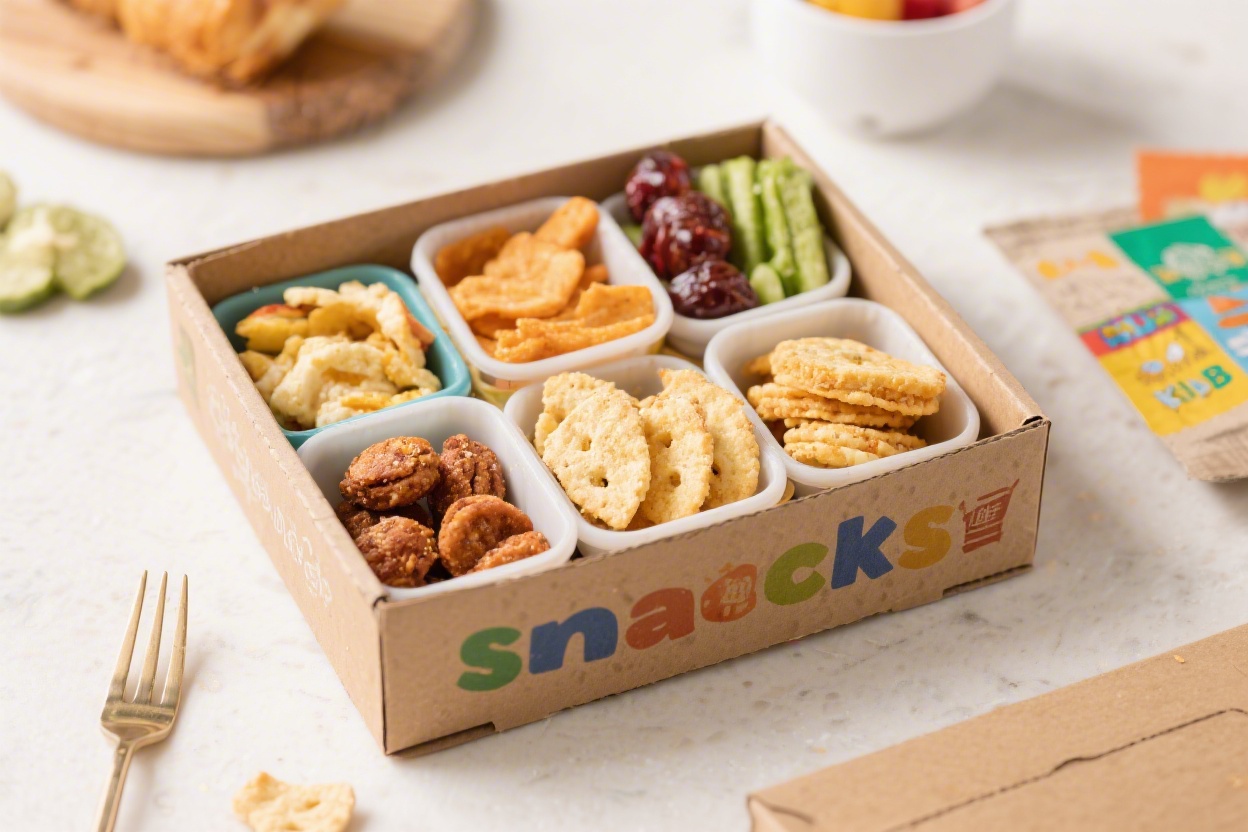
Pick your portions. For a balanced box, plan roughly: 1 protein (1/4–1/2 cup), 1 carb (1/4–1/2 cup or a small handful), 1–2 fruits/veggies (1/2–1 cup total), and 1 healthy fat (1–2 tablespoons).
Prep produce. Wash, dry, and cut fruits and veggies into bite-sized pieces.
Halve grapes and cherry tomatoes for safety. Pat dry so the box stays crisp.
Batch-cook or assemble proteins. Boil eggs, portion cheese, roast chickpeas, or cook extra chicken at dinner. Keep everything in separate containers for easy grab-and-go assembly.
Choose a base theme. Pick a simple theme to make choices easy: “Turkey & Crackers,” “Hummus & Veggies,” or “Yogurt & Granola.” Themes help you avoid decision fatigue.
Assemble neatly. Use sectioned containers or silicone cups to separate wet and dry items.
Keep crackers, popcorn, and granola away from juicy fruits to prevent sogginess.
Add a fun dip or sprinkle. A small container of hummus or yogurt dip makes veggies more exciting. A pinch of cinnamon on apple slices or granola can boost flavor without extra sugar.
Include a hydration reminder. Pair the snack box with a water bottle. For a treat, add a splash of 100% fruit juice to sparkling water.
Label and pack. Label each box with the date and kid’s name if sending to school.
Add an ice pack to keep dairy and protein safe.
Rotate components. Change one or two elements each day to keep it interesting—swap berries for kiwi, crackers for mini pitas, or hummus for cottage cheese.
Invite kids to help. Let them pick a fruit, a veggie, and a “crunchy.” When kids help, they’re more likely to eat what’s inside.